· Updated
CAR-T Therapy for Ovarian Cancer Reaches New Dose Milestone — And Patients Are Responding
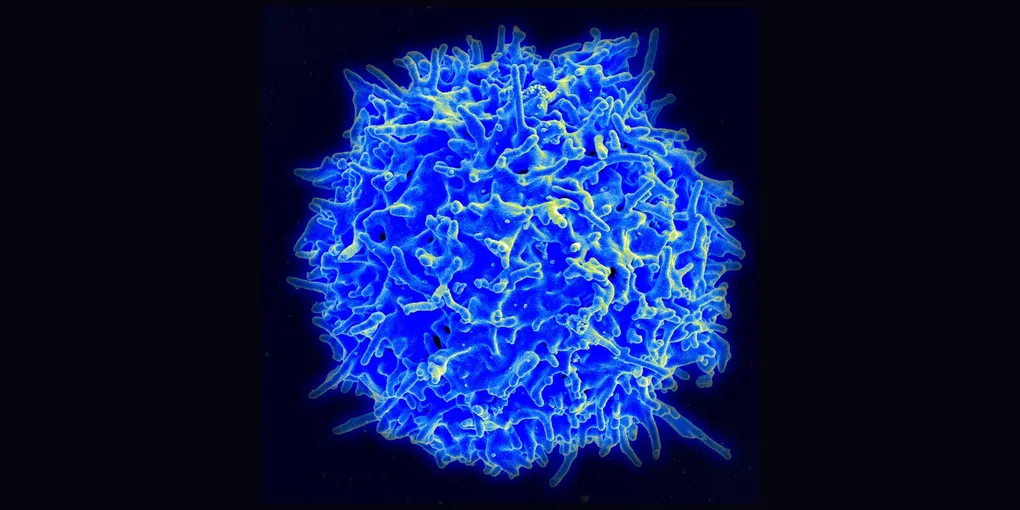
There’s a kind of cancer treatment that sounds like science fiction and is already, quietly, standard care for some blood cancers: doctors take your own immune cells out of your body, reprogram them in a lab to recognize your cancer, grow them by the millions, and put them back in.
It’s called CAR-T therapy, and for people with certain leukemias and lymphomas it has produced results that were genuinely unimaginable twenty years ago — including long remissions in people who had run out of every other option.
For solid tumors like ovarian cancer, it has been much, much harder. This spring, that started to change.
First, how CAR-T actually works
Your T cells are the immune system’s assassins. They patrol your body looking for cells that don’t belong, and when they find one, they kill it. They’re extraordinarily good at this — as long as they can recognize the target.
That’s the whole problem with cancer. Cancer cells are your cells, gone wrong. They wear mostly the right badges. Your T cells walk past them all day.
CAR-T therapy fixes the recognition problem directly. Doctors collect your T cells, and in the lab they insert a gene that makes each cell build a new receptor on its surface — a chimeric antigen receptor, the CAR. Think of it as issuing your immune system a new pair of glasses, ground to a very specific prescription: this protein, right here, is the enemy. The engineered cells are multiplied into the millions and infused back into you, where they hunt down anything wearing that protein and destroy it.
In blood cancers, this works beautifully — the target cells float freely in the bloodstream, easy to reach. Solid tumors are a different challenge. They’re dense, physically hard to get into, and surrounded by a hostile microenvironment that exhausts immune cells before they can do their job. And finding a target protein that appears on the cancer but not on healthy tissue is genuinely difficult — because if you get that wrong, the therapy attacks the patient.
The Moffitt trial: a target that only cancer wears

Anixa Biosciences, working with Moffitt Cancer Center, built its therapy — called lira-cel — around a clever solution to that targeting problem.
Their target is FSHR, the follicle-stimulating hormone receptor. In an adult woman, this receptor appears on ovarian cancer cells and on the blood vessels feeding the tumor, and essentially nowhere else in healthy tissue. That’s an unusually clean target.
The design is clever in a second way. Most CAR-T therapies use a fragment of an antibody as the homing device. This one uses the natural hormone that fits the receptor — FSH itself. Rather than engineering a synthetic key, they used the key the lock was built for. (Technically this makes it a chimeric endocrine receptor T cell, or CER-T, but the principle is the same.)
The cells are delivered intraperitoneally — injected directly into the abdominal cavity where ovarian cancer lives and spreads — rather than into the bloodstream. It’s the difference between mailing something to the right house and mailing it to the right country.
What the numbers show
Every woman in this Phase 1 trial had recurrent ovarian cancer that had already progressed through two or more prior treatments. For women in that situation, expected median survival is roughly three to four months.
In the survival update Anixa released in May, one woman was out past 28 months. Three had passed a year — at 18, 17, and 17 months. Four more had reached 11, 11, 8, and 7 months. Four of them were still alive and being followed.
We want to be careful about what this does and doesn’t prove. This is a handful of patients. A Phase 1 trial is designed to test safety, not effectiveness, and it has no control group — so we can’t say with certainty that the therapy caused these outcomes rather than, say, these particular women having somewhat less aggressive disease. Individual survival varies enormously.
But here’s the part that changes the calculus: these women were treated at doses the researchers believe were below the therapeutic range. Phase 1 trials start deliberately low and climb carefully, because the first question is whether a new treatment hurts people.
And at every level so far: no dose-limiting toxicities. Nothing has forced the researchers to stop or step back. Just as importantly, there has been no significant cytokine release syndrome and no ICANS — the two toxicities that have defined CAR-T therapy since it began. Cytokine release syndrome is what happens when newly activated immune cells flood the body with signalling chemicals all at once; it can range from a bad fever to something requiring intensive care. ICANS is its neurological cousin, causing confusion and, rarely, seizures. Both are managed routinely in blood-cancer centres, but their absence here is a genuinely good sign — and part of why researchers think delivering the cells into the abdomen rather than the bloodstream may be paying off.
Dr. Amit Kumar, Anixa’s CEO, framed the earlier data plainly: “Although these patients were treated at doses we believe are below the optimal therapeutic range, we are encouraged by the number of individuals who have lived far longer than expected.”
Why the dose milestone matters
Because the therapy has proved safe at each step, the protocol was amended to permit escalation as high as 1 billion cells per kilogram — orders of magnitude above where the trial began.
Sit with that for a second. If these women beat their expected survival at doses the researchers consider too low to be optimal, the obvious question is what happens at a dose that isn’t.
Participants in the higher cohorts also receive lymphodepletion first — a short course of two chemotherapy drugs, cyclophosphamide and fludarabine, given before the engineered cells go in. This sounds counterintuitive: why give chemo before an immune therapy? The answer is real estate. Your immune system maintains a roughly fixed population of cells, and a crowded system leaves newly infused cells nowhere to expand. Lymphodepletion clears space so the engineered cells can multiply and persist rather than being crowded out. It’s standard practice in blood-cancer CAR-T; using it in solid tumors is still investigational.
Update, August 2026. Since this piece was published, the trial has moved into its fifth cohort — the highest dose level given so far, 10 million CAR-positive cells per kilogram, now paired with lymphodepletion. The survival picture has continued to improve: five women have now passed a year, at roughly 28, 20, 17, 17, and 13 months. Still no dose-limiting toxicities at any dose level tested. “Advancing to the fifth cohort and highest dose level while observing no dose-limiting toxicities across the study to date is a meaningful milestone for the program,” Dr. Kumar said.
Meanwhile, at Stanford
A second group is coming at the same problem from a different angle.
At Stanford, Dr. Crystal Mackall — founding director of the Center for Cancer Cell Therapy — and Dr. Oliver Dorigo, who directs gynecologic oncology, are running a CAR-T trial aimed at a different target: B7-H3, a protein the Stanford team reports on roughly 90% of ovarian cancers. (Published tissue surveys put it in a similar range — one found B7-H3 in 93% of ovarian tumors — though the exact figure varies with how it’s measured.) Like the Moffitt trial, the cells go directly into the abdomen.
Seven women with advanced, treatment-resistant disease have enrolled since late 2024. Tumors stabilized, and some began shrinking within two months. “We have definitely seen initial benefits,” Dorigo said, describing “positive signals.”
They also ran into a problem worth being honest about: at first the engineered cells were too enthusiastic, causing fever, low blood counts, and swelling. The team lowered the dose, which improved how patients tolerated the treatment while keeping the tumors in check. Participants now receive up to three infusions. Ten more patients are planned at the lower dose, and a next-generation version — one with a built-in control mechanism, so clinicians can dial the cells’ activity up or down rather than hoping for the best — is expected this summer.
The “don’t eat me” sign
Dorigo is running a second trial, in partnership with the lab of Dr. Irving Weissman, that uses a completely different immune trick.
Your body contains cells called macrophages — literally “big eaters.” Their job is to engulf and digest debris, damaged cells, and invaders. They are, in the most literal sense, the immune system’s cleanup crew.
Healthy cells protect themselves from being eaten by displaying molecular “don’t eat me” signals. One of these is a protein called CD24. Ovarian cancer cells display a great deal of it — they’ve essentially hung a do not disturb sign on the door and gone on multiplying while the cleanup crew walks past.
The trial uses an antibody that covers up CD24. Take away the sign, and the macrophages do what they were always going to do.
Five Stanford patients have been treated since July 2025. It is far too early for conclusions, though tolerability has been good across the institutions involved.
What this means if you’re the one waiting
If you or someone you love has recurrent ovarian cancer that has stopped responding to chemotherapy, here is the honest summary:
These are early-phase trials. They involve small numbers of women, no control groups, and treatments that are years from approval. Nobody should expect a cure from a Phase 1 study.
But something meaningful is happening. Two independent groups, chasing two different targets, are both seeing tumors respond in women whose disease had stopped responding to everything else. Neither is being stopped by the toxicity that has historically made cell therapy so difficult in solid tumors. And the Moffitt trial has room to go a hundred times higher on dose.
For a long time, “immunotherapy doesn’t really work in ovarian cancer” was one of the settled facts of this field. It’s looking less settled every month.
If you’re considering a trial, ask your oncologist directly which cell therapy studies you might be eligible for, and whether your tumor has been tested for the relevant markers. Ask what the travel and time commitment looks like — cell therapy usually means going where the manufacturing is. And ask what “eligible” would require, because eligibility criteria are specific and it’s better to know now than to find out later.
Trials are not a last resort. Sometimes they’re the best available medicine, arriving a few years early.
Sources
- Anixa Biosciences reports updated positive survival observations from the Phase 1 lira-cel trial (May 2026)
- Anixa Biosciences and Moffitt Cancer Center advance ovarian cancer CAR-T trial to highest dose level to date (July 2026)
- Anixa Biosciences reports encouraging patient survival in ovarian cancer CAR-T trial (February 2026)
- New approaches to ovarian cancer — Stanford Medicine Magazine