The Vaccine That Could Prevent Ovarian Cancer Before It Starts

Jamie Crase was 34 when she was diagnosed with stage IV ovarian cancer. The five-year survival figure she was handed was 31%.
She’s 52 now. Thirteen years after receiving an experimental vaccine, she says it simply: “I’m still here.”
She’s also acutely aware of what that means. “Most women aren’t here 5 years after their diagnosis.”
We want to be careful with a story like Jamie’s, because one woman’s outcome isn’t proof of anything, and hope built on a single anecdote breaks easily. But Jamie wasn’t alone in that trial — and the numbers from the group she was part of are worth your attention.
Wait — a vaccine for cancer?
The word “vaccine” probably makes you think of flu shots and measles: something you get before you’re sick, to stop a germ from taking hold.
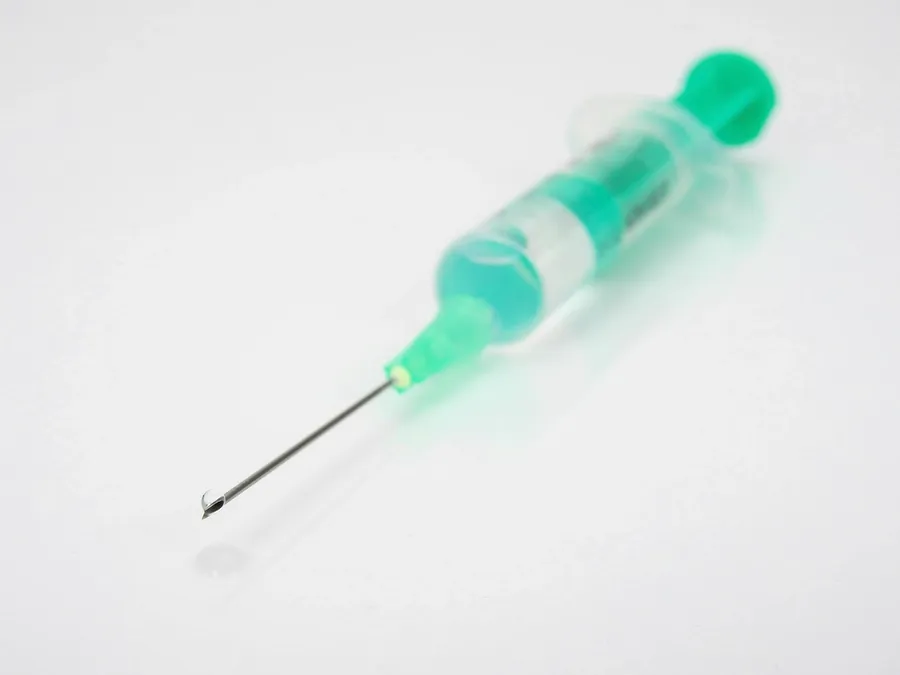
Cancer vaccines work on the same underlying principle, but they’re aimed at your own cells rather than an invading microbe. And there are two very different kinds, which get confused constantly.
A therapeutic vaccine is given to someone who already has, or has had, cancer. Its job is to teach the immune system to recognize and destroy cancer cells that are still in the body — the stragglers left behind after surgery and chemotherapy, too few to see on a scan but enough to eventually regrow.
A preventive vaccine is given to someone who is healthy but at high risk, so their immune system is already primed to destroy abnormal cells before they ever become a tumor.
Both work by the same mechanism: showing the immune system a mugshot. Vaccines train T cells by presenting them with a specific protein and effectively saying memorize this face; if you ever see it again, act. With an infection, that face belongs to a virus. With cancer, it belongs to a protein that cancer cells make in abundance and healthy cells largely don’t.
Two ovarian cancer vaccines are worth following right now. One of each kind.
The recurrence vaccine: IGFBP-2
The vaccine Jamie received comes out of the University of Washington’s Cancer Vaccine Institute, where the program is led by Dr. Nora Disis. Its target is a protein with an unwieldy name — IGFBP-2, insulin-like growth factor binding protein 2 — and a very specific role.
IGFBP-2 is one of the proteins that drives metastasis: the process by which cancer stops staying put and starts spreading. Ovarian cancer cells make a great deal of it. Healthy adult tissue makes very little.
That makes it close to an ideal mugshot. Train the immune system on IGFBP-2 and you’re teaching it to hunt down precisely the cells most inclined to travel.
The Phase I trial enrolled women with advanced or recurrent ovarian cancer who were in complete remission — the fragile, anxious period after treatment ends, when everything looks clear and everyone is waiting to find out whether it stays that way.
The results:
- The vaccine was safe. Side effects were minor, comparable to a flu shot. This is not a small thing. Most cancer treatments cost the patient something significant in quality of life.
- More than 50% of the women were alive eight years later.
- One-third never had a recurrence at all.
For women with advanced ovarian cancer in remission, those are extraordinary numbers. Recurrence is the norm in this disease, not the exception.
The usual caution applies, and it’s a real one: Phase I trials are small and have no control group, so we can’t say with certainty that the vaccine caused these outcomes. That is exactly what the next trial is for.
The Phase II trial launched in early 2026, led by Dr. John Liao, and its design is clever. It will enroll roughly 22 patients — but it’s targeting an even earlier moment than the first trial did.
The women it’s recruiting are those with the very first hint of recurrence: a rising CA-125 blood level, with nothing yet visible on a scan. CA-125 is a protein that shows up in the blood of many women with ovarian cancer, and it’s routinely tracked after treatment. A rising level often signals that cancer is returning months before any imaging can find it. (If that test is part of your own follow-up, our guide to the CA-125 blood test explains what it can and can’t tell you.)
That window — cancer definitely coming back, but still microscopic — is exactly where an immune therapy has its best odds. The immune system is very good at picking off small numbers of scattered cells and much worse at demolishing a large established tumor. The trial is asking whether you can meet a recurrence at its smallest and end it before it ever becomes visible.
The prevention vaccine: OvarianVax
The second project is more ambitious, further from the clinic, and aimed at a group of women who currently face a very hard choice.
At the University of Oxford, Professor Ahmed Ahmed is developing OvarianVax, a preventive vaccine intended primarily for women who carry BRCA1 or BRCA2 mutations.
If you carry one of those mutations, your lifetime risk of ovarian cancer is dramatically higher than average. And the most effective option currently available is surgery: removing the ovaries and fallopian tubes, often well before natural menopause, with everything that entails — surgical menopause, fertility ended, hormonal consequences that last for decades.
It works. It is also an enormous thing to ask of a healthy woman in her thirties or forties, and many women agonize over it for years.
A vaccine would be a different proposition entirely. An injection that teaches the immune system to recognize and eliminate cells on the path to becoming cancer — before there’s anything to remove.
The science leans on a discovery that reshaped this field: most ovarian cancers appear not to start in the ovaries at all, but in the fallopian tubes. Cells there begin to go wrong, and the disease travels from there. That gives researchers a specific place to watch and a specific early population of abnormal cells to target.
The Oxford team is currently working out which proteins on those earliest abnormal cells the immune system can be trained to see — the mugshot problem, essentially, at the very earliest stage of the disease. Funding from Cancer Research UK has accelerated the work, which builds on more than a decade of foundational research funded by Ovarian Cancer Action.
Where it stands: Pre-clinical. The current project runs three years, and no clinical trial date has been set. From there it would still need testing in people, then larger trials, then regulatory approval. Realistically this is years away, and we’d rather say so than let anyone reorganize their plans around it.
But the direction is worth sitting with. A prevention vaccine, if it worked, wouldn’t just help BRCA carriers. The long-term goal is to extend it far more broadly — a world where ovarian cancer is something we vaccinate against, the way we now vaccinate against the HPV infections that cause most cervical cancers.
That’s not a fantasy. It’s a thing that already happened once, in a different cancer, within living memory.
Two ends of the same idea
Put these two side by side and you can see the shape of where this is heading.
The IGFBP-2 vaccine is about stopping the return — meeting recurrence at its smallest and most vulnerable moment, and doing it with side effects no worse than a sore arm.
OvarianVax is about stopping the start — reaching the disease before it exists, in women who currently have to choose between surgery and living with the risk.
Between them is nearly everything ovarian cancer takes from people. And unlike so much cancer treatment, neither approach asks a woman to be poisoned in order to be saved. That matters. Ask anyone who has been through six cycles of platinum chemotherapy what she’d give for a treatment that felt like a flu shot.
What to do with this
If you’re in remission after ovarian cancer: ask your oncologist about vaccine trials, and specifically about the UW Phase II study if you’re being monitored for a rising CA-125. Trials that enroll women in remission are less widely known than treatment trials, and you may not hear about them unless you ask.
If you carry a BRCA1 or BRCA2 mutation: OvarianVax is not an option yet, and it shouldn’t factor into decisions you’re making now. Keep the conversation with your genetic counselor and gynecologic oncologist focused on the options that exist today. But it’s a good thing to know is coming.
If you’re supporting someone through this: research like this exists because women in remission volunteered for a Phase I trial with no guarantee it would help them, and because donors funded a decade of unglamorous laboratory work before anyone knew where it led.
Jamie Crase is thirteen years past a diagnosis that gave her a 31% chance of seeing five. One woman’s story isn’t evidence. But more than half of the women in her trial were alive at eight years — and that is the beginning of something.
Sources